WHY The Science of Compassion?
DON’T BELIEVE. INVESTIGATE.


We have learned to look farther into space and farther back in time than anyone could have imagined a few centuries ago. And yet, after all of this extraordinary progress, there is something immediately present to every one of us that remains profoundly mysterious.
We know that we are conscious. We experience colors, sounds, sensations, emotions, memories and thoughts. We imagine things that do not yet exist. We make choices. We form intentions and pursue goals. We experience ourselves as separate individuals, each apparently occupying a private interior world that no one else can directly enter.
But what exactly is this experience?

Why should electrical and chemical activity inside a physical system produce the sensation of being someone?
Perhaps consciousness is entirely produced by the brain, and someday neuroscience will explain exactly how. That possibility should remain completely open. But another possibility is equally intriguing: perhaps consciousness is not something that matter somehow manufactures after billions of years of evolution. Perhaps consciousness is part of the fundamental structure of reality itself.

That is a very different proposition.
It is also a proposition that should not be confused with a scientific fact. The Science of Compassion Project does not claim that consciousness has been demonstrated to be fundamental. It asks whether the possibility deserves serious investigation. The distinction is important because the history of science is full of occasions when the existing model of reality turned out to be incomplete.
An unexpected observation, an unexplained discrepancy or a strange mathematical result sometimes becomes the doorway to an entirely new way of seeing the universe.
Science does not require us to believe the new idea. It requires us to test it.
DON’T BELIEVE. INVESTIGATE.

Look at what happened to our understanding of the physical universe. Galileo and Kepler helped replace speculation about how heavenly bodies ought to move with precise observation and mathematical description. Newton gave us a framework that transformed the study of motion and gravity. Then came the strange behavior of light, relativity, quantum mechanics, antimatter and the discovery of particles that had first existed only as mathematical possibilities. Again and again, nature forced human beings to reconsider what they thought they knew.
And today we have some very large unanswered questions.
There is no reason to assume that our present understanding of reality is the final model.

String theory, for example, has been developed in mathematical forms that require additional dimensions beyond the familiar three dimensions of space and one of time. These additional dimensions are theoretical features of particular physical models. They have not been experimentally established as dimensions of consciousness. They are too miniscule to detect using current technologies, so what’s the point?
But suppose we ask a different question.
What if some of the dimensions required by our most ambitious theories of physics are not merely dimensions of physical space hidden from our perception? What if a dimension does not have to resemble another direction in space? What if there are dimensions associated with another fundamental property of reality?
Time certainly doesn’t feel like another direction in space. It behaves differently, is measured differently and participates in physical reality in a way that is fundamentally unlike length, width or height. If nature can contain a dimension that is so different from our ordinary experience of space, why should we assume that every possible dimension must be spatial in character?
It is also a proposition that should not be confused with a scientific fact. The Science of Compassion Project does not claim that consciousness has been demonstrated to be fundamental. It asks whether the possibility deserves serious investigation. The distinction is important because the history of science is full of occasions when the existing model of reality turned out to be incomplete. An unexpected observation, an unexplained discrepancy or a strange mathematical result sometimes becomes the doorway to an entirely new way of seeing the universe.
Science does not require us to believe the new idea. It requires us to test it.
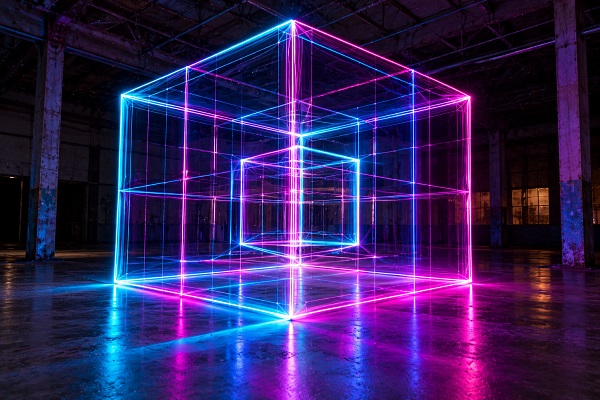
What if some of the dimensions required by our most ambitious theories of physics are not merely dimensions of physical space hidden from our perception? What if a dimension does not have to resemble another direction in space? What if there are dimensions associated with another fundamental property of reality?
Time certainly doesn’t feel like another direction in space. It behaves differently, is measured differently and participates in physical reality in a way that is fundamentally unlike length, width or height. If nature can contain a dimension that is so different from our ordinary experience of space, why should we assume that every possible dimension must be spatial in character?
This is where the Science of Compassion Project begins to play with an idea.
Perhaps the additional dimensions are associated with properties of reality that we do not currently have instruments or concepts for describing. Perhaps some of those properties have something to do with consciousness.
Not proven.
Not even established as a scientific hypothesis.
But worth imagining.
SPACE. TIME. CONSCIOUSNESS.
Suppose for a moment that consciousness is fundamental. Suppose that the extra dimensions suggested by theoretical physics are somehow related to aspects of consciousness that are invisible to our ordinary spacetime measurements. Then our familiar universe could be only part of the picture. The physical event we describe with x, y, z, t might have additional coordinates that we do not ordinarily perceive.
The idea is not that there is a little ghostly universe sitting beside the physical universe. It is subtler than that. The suggestion is that what we call physical reality and what we call conscious experience might be different aspects of a larger multidimensional reality.
That possibility could provide a different way of thinking about some of the oldest and strangest questions we have about ourselves.
Every conscious individual experiences a world that is inaccessible to everyone else in precisely the same way. I can observe your body. I can listen to your words. I can measure activity in your brain. But I cannot directly experience your experience.
You cannot directly experience mine.
Each of us seems to inhabit a private universe.
Perhaps these private universes are simply the result of extraordinarily sophisticated biological machinery. That remains a perfectly reasonable possibility. But if consciousness is fundamental, another interpretation becomes possible: individual consciousness could be understood as a localized expression of something more fundamental, much as a wave is a localized expression of a larger field.
The analogy is not a proof. It is a way of asking a question.
If consciousness has a fundamental component, then our individual experience might not be as isolated from the rest of reality as it appears. The apparent separation between conscious beings could be a feature of how consciousness is organized rather than an absolute boundary. As an H2O molecule in a drop of water with that drop as part of the ocean. One universal conscious field. One consciousness.
And if that were true, compassion would take on an entirely different significance.
Compassion is usually understood as an ethical or emotional response. We recognize another being’s suffering and respond to it. We care. We help. We attempt to reduce suffering because we perceive another person as valuable. We’re human, right?
But what if the apparent separation between “me” and “you” is not the whole story?
What if consciousness is more deeply interconnected than our ordinary experience suggests?
Then compassion might not merely be a moral preference. It could be an expression of something fundamental about the way conscious reality is organized. This possibility is one reason the scientific investigation of consciousness matters. As the song Love is Scientific says, “Love is both the lubricant and the glue.”
There is another reason.
If consciousness is fundamental, and if individual consciousness is connected at a deeper level than our ordinary experience suggests, then compassion might not simply be a moral preference. It might reflect something about the actual structure of reality.
We don’t have to assume that conclusion. We can investigate it.
Does compassion change the way people respond to illness? Does it affect recovery, stress, resilience or cooperation? Does compassion alter the behavior of groups? Can compassionate responses to trauma change long-term outcomes? Can we measure the effects of treating another conscious being as worthy of attention rather than as an obstacle, competitor or abstraction?
Those questions are available to science whether or not the larger metaphysical hypothesis proves correct.
And perhaps this is the most important reason to investigate consciousness. If we learn that consciousness is fundamental, we may eventually discover that our treatment of conscious beings is not merely an ethical issue sitting outside science. It may be part of understanding the universe itself.
THE POSSIBILITY OF ONENESS
There is an even larger possibility.
What if the apparent separation between individual conscious beings is not the deepest level of reality?
The phrase “All is One” can sound like a spiritual slogan. But the scientific question underneath it is more precise. Is there a deeper common substrate from which apparently separate conscious experiences emerge? Is consciousness localized, or is individuality something like a localized expression of a larger field? Could the additional dimensions of a multidimensional universe provide the mathematical structure within which such a relationship might eventually be described?
We don’t know.
But imagine that there were dimensions of reality outside the ordinary constraints of spacetime, and that consciousness had access to them. Suddenly a number of otherwise unrelated questions might belong to the same investigation.
Consciousness.
Nonlocality.
Unusual states of awareness.
The quantum vacuum.
The nature of the extra dimensions.
And perhaps, eventually, phenomena that today seem to lie outside the boundaries of conventional science.
That is where investigation becomes more interesting than belief.
Look at what happened to our understanding of the physical universe. Galileo and Kepler helped replace speculation about how heavenly bodies ought to move with precise observation and mathematical description. Newton gave us a framework that transformed the study of motion and gravity. Then came the strange behavior of light, relativity, quantum mechanics, antimatter and the discovery of particles that had first existed only as mathematical possibilities. Again and again, nature forced human beings to reconsider what they thought they knew.
The point is not that every anomaly represents a new universe waiting to be discovered. Most don’t. The point is that we cannot know which ones matter until we investigate them. A scientific model is valuable because it works. But when it stops working, the appropriate response is not to protect the model. It is to find out why.
And today we have some very large unanswered questions.
What is dark matter? What is dark energy? Why does the universe have the properties it does? Why does quantum mechanics work so extraordinarily well while remaining so difficult to reconcile with gravity? And perhaps most personally of all, why does any physical process have an accompanying subjective experience?
There is no reason to assume that our present understanding of reality is the final model.
In fact, modern physics already gives us reason to be cautious about what we think reality must look like. Space and time are not the fixed and absolute background that they once appeared to be. Matter is not quite the simple collection of little solid objects that everyday experience suggests. The vacuum is not simply empty nothingness. And some of the most successful theories in physics raise questions about dimensions of reality beyond the four dimensions of ordinary spacetime.
String theory, for example, has been developed in mathematical forms that require additional dimensions beyond the familiar three dimensions of space and one of time. These additional dimensions are theoretical features of particular physical models. They have not been experimentally established as dimensions of consciousness. They are too miniscule to detect using current technologies, so what’s the point?
And today we have some very large unanswered questions.
What is dark matter? What is dark energy? Why does the universe have the properties it does? Why does quantum mechanics work so extraordinarily well while remaining so difficult to reconcile with gravity? And perhaps most personally of all, why does any physical process have an accompanying subjective experience?
What if some of the dimensions required by our most ambitious theories of physics are not merely dimensions of physical space hidden from our perception? What if a dimension does not have to resemble another direction in space? What if there are dimensions associated with another fundamental property of reality?
Time certainly doesn’t feel like another direction in space. It behaves differently, is measured differently and participates in physical reality in a way that is fundamentally unlike length, width or height. If nature can contain a dimension that is so different from our ordinary experience of space, why should we assume that every possible dimension must be spatial in character?
This is where the Science of Compassion Project begins to play with an idea.
Perhaps the additional dimensions are associated with properties of reality that we do not currently have instruments or concepts for describing. Perhaps some of those properties have something to do with consciousness.
Not proven.
Not even established as a scientific hypothesis.
But worth imagining.
SPACE. TIME. CONSCIOUSNESS.
Suppose for a moment that consciousness is fundamental. Suppose that the extra dimensions suggested by theoretical physics are somehow related to aspects of consciousness that are invisible to our ordinary spacetime measurements. Then our familiar universe could be only part of the picture. The physical event we describe with x, y, z, t might have additional coordinates that we do not ordinarily perceive.
The idea is not that there is a little ghostly universe sitting beside the physical universe. It is subtler than that. The suggestion is that what we call physical reality and what we call conscious experience might be different aspects of a larger multidimensional reality.
That possibility could provide a different way of thinking about some of the oldest and strangest questions we have about ourselves.
Every conscious individual experiences a world that is inaccessible to everyone else in precisely the same way. I can observe your body. I can listen to your words. I can measure activity in your brain. But I cannot directly experience your experience.
You cannot directly experience mine.
Each of us seems to inhabit a private universe.
Perhaps these private universes are simply the result of extraordinarily sophisticated biological machinery. That remains a perfectly reasonable possibility. But if consciousness is fundamental, another interpretation becomes possible: individual consciousness could be understood as a localized expression of something more fundamental, much as a wave is a localized expression of a larger field.
The analogy is not a proof. It is a way of asking a question.
If consciousness has a fundamental component, then our individual experience might not be as isolated from the rest of reality as it appears. The apparent separation between conscious beings could be a feature of how consciousness is organized rather than an absolute boundary. As an H2O molecule in a drop of water with that drop as part of the ocean. One universal conscious field. One consciousness.
And if that were true, compassion would take on an entirely different significance.
Compassion is usually understood as an ethical or emotional response. We recognize another being’s suffering and respond to it. We care. We help. We attempt to reduce suffering because we perceive another person as valuable. We’re human, right?
But what if the apparent separation between “me” and “you” is not the whole story?
What if consciousness is more deeply interconnected than our ordinary experience suggests?
Then compassion might not merely be a moral preference. It could be an expression of something fundamental about the way conscious reality is organized. This possibility is one reason the scientific investigation of consciousness matters. As the song Love is Scientific says, “Love is both the lubricant and the glue.”
There is another reason.
If consciousness is fundamental, and if individual consciousness is connected at a deeper level than our ordinary experience suggests, then compassion might not simply be a moral preference. It might reflect something about the actual structure of reality.
We don’t have to assume that conclusion. We can investigate it.
Does compassion change the way people respond to illness? Does it affect recovery, stress, resilience or cooperation? Does compassion alter the behavior of groups? Can compassionate responses to trauma change long-term outcomes? Can we measure the effects of treating another conscious being as worthy of attention rather than as an obstacle, competitor or abstraction?
Those questions are available to science whether or not the larger metaphysical hypothesis proves correct.
And perhaps this is the most important reason to investigate consciousness. If we learn that consciousness is fundamental, we may eventually discover that our treatment of conscious beings is not merely an ethical issue sitting outside science. It may be part of understanding the universe itself.
THE POSSIBILITY OF ONENESS
There is an even larger possibility.
What if the apparent separation between individual conscious beings is not the deepest level of reality?
The phrase “All is One” can sound like a spiritual slogan. But the scientific question underneath it is more precise. Is there a deeper common substrate from which apparently separate conscious experiences emerge? Is consciousness localized, or is individuality something like a localized expression of a larger field? Could the additional dimensions of a multidimensional universe provide the mathematical structure within which such a relationship might eventually be described?
We don’t know.
But imagine that there were dimensions of reality outside the ordinary constraints of spacetime, and that consciousness had access to them. Suddenly a number of otherwise unrelated questions might belong to the same investigation.
Consciousness.
Nonlocality.
Unusual states of awareness.
The quantum vacuum.
The nature of the extra dimensions.
And perhaps, eventually, phenomena that today seem to lie outside the boundaries of conventional science.
That is where investigation becomes more interesting than belief.
Humanity has acquired enormous power while remaining uncertain about the nature of the conscious being wielding that power.
We can alter the atmosphere, split atoms, create machines that imitate aspects of human intelligence and communicate almost instantaneously around the planet. We can manipulate the smallest components of matter and observe the largest structures in the universe.
But we are still struggling with hatred, fear, tribalism and the inability to recognize the humanity of people whose experience of reality differs from our own.
Perhaps the next great expansion of science will not be simply another expansion outward.
Perhaps it will be inward.
Perhaps we need a science capable of investigating the observer as well as the observed.
A science capable of asking whether consciousness is fundamental.
A science capable of asking whether compassion has measurable consequences.
A science willing to investigate the possibility that the boundaries we take for granted are not the boundaries of reality.
THE POINT OF THE PROJECT
The Science of Compassion Project is therefore not a finished theory.
It is an invitation to investigate.
Some of its ideas may turn out to be wrong. Some may turn out to be useful metaphors. Some may lead to questions nobody has thought to measure. And perhaps, buried somewhere among these speculations, there may be a clue to a deeper understanding of reality.
That is enough.
We do not need certainty to begin.
We need curiosity.
We need mathematics, experiments, instruments, imagination and people willing to look at a problem from an unfamiliar direction.
And we need to maintain the distinction between what we know and what we imagine.
Because the objective is not to replace one belief system with another.
The objective is to discover what is actually there.
SPACE. TIME. CONSCIOUSNESS.
DON’T BELIEVE. INVESTIGATE.